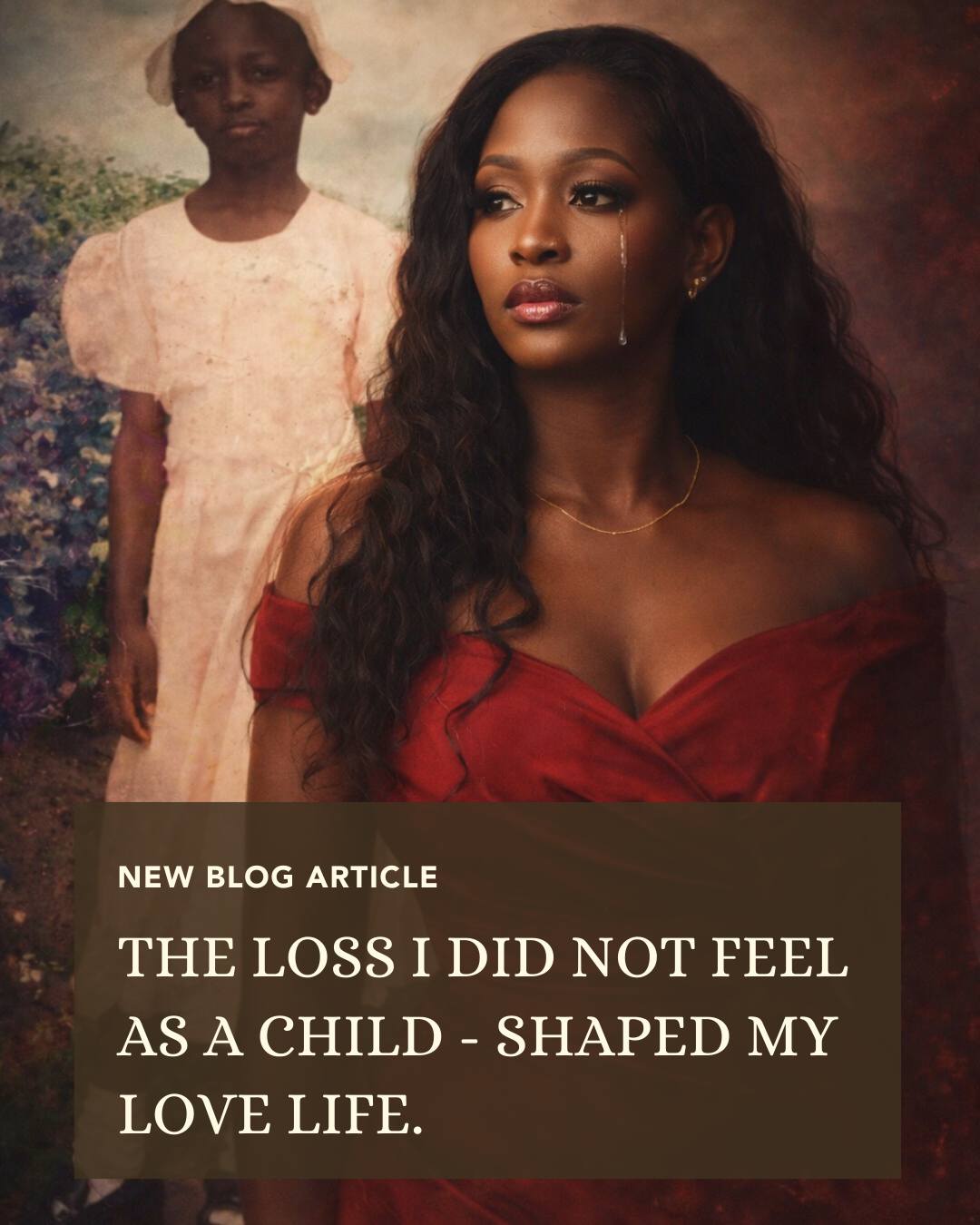
2001
I barely remember the day clearly. What I remember most is something almost embarrassing to admit.
Everyone in the house was crying. My mother was crying. The atmosphere was heavy. Something serious had happened, but I was just a little girl trying to understand what was going on.
I remember wiping my mum’s tears.
And when she finally stopped crying, she looked at me as if she expected me to ask a question.
Maybe she thought I would ask why everyone was crying.
But instead, I said:
“Mommy… I’m hungry. I want palm oil rice.”
That was how little I was.
I didn’t understand death. I didn’t understand loss. I didn’t understand that the man who loved me and protected me was gone forever.
So I never cried for my father.
At least not then.
My siblings were older when it happened. I believe they felt the loss differently. They understood it. But I didn’t. I just kept growing up like a normal child, never realizing that something inside me had been quietly missing.
And sometimes the most dangerous wounds are the ones you never knew you had.
As I grew older, life forced me to become independent very quickly.
I started working and trying to build something for myself when I was still a teenager. Sixteen. Seventeen. Starting a business, figuring out life on my own.
Looking back now, I realize how young I really was.
I was just a child trying to survive in an adult world.
Growing up, many of my relatives had already written me off. I was stubborn. Difficult. The kind of child people assume will never amount to anything.
So in their minds, my future didn’t look promising.
And maybe that’s part of why I left home early.
Because when people already believe you won’t become anything, you learn very quickly that you have to carry your future in your own hands.
But being young and alone also meant something else.
It meant there was no one protecting me.
And when you’re a young woman in business, trying to navigate life alone, people notice that. Some people take advantage of it.
I went through things I never spoke about with my family.
Failures. Betrayals. Being taken advantage of in business. Situations that would have been easier if there was a father figure in my life saying:
“Don’t worry, I’ve got you.”
But there was no one to say that.
So I learned to survive alone.
Even when things went wrong, I never felt like I could go back to my family, my siblings, or even my mother and say, “I need help.”
I always had to figure it out myself.
Then I started dating.
My first real relationship was with a young black man. And I loved him deeply.
But it was toxic.
He was controlling. Violent. He beat me. He made me feel small. I was insecure. I didn’t feel safe. I didn’t feel seen.
And the painful part is… that relationship shaped a lot of how I felt afterwards.
After him, I dated two more black men.
Both relationships were unhealthy.
Both left me feeling unseen.
And somewhere inside me, a fear started to grow.
Then something changed.
For the first time, I met an Italian man.
He was older. Much older — in his 50s.
And something about that relationship felt completely different.
For the first time, I felt safe.
I didn’t feel like I had to fight to be respected. I didn’t feel like I had to prove my worth. It felt natural to respect him. Natural to trust him.
He provided for me. He protected me. He made me feel cared for.
And I loved how that felt.
At the time, I didn’t understand why it felt so different.
I thought maybe I just preferred older men.
But the truth is deeper than that.
Years later, after life, after relationships, after therapy and doing the hard inner work, I finally understood something about myself.
I wasn’t just attracted to older men.
I was searching for something I lost when I was six years old.
I was searching for protection.
For safety.
For the feeling of having a man in my life who protects me the way a father protects his daughter.
A man who provides.
A man who makes the world feel less heavy.
A man who makes me feel like I can rest.
That’s why when I’m loved properly in a relationship, when a man provides, protects, and leads with care, something inside me relaxes completely.
Because that feeling… feels like home.
It’s not just romance.
It’s healing.
And that is something many people never ask about when they meet you.
We spend months talking about favorite foods, hobbies, travel, and music.
But we rarely ask the deeper questions.
Who were you before the world hardened you?
What pain shaped the woman you became?
What loss still lives quietly inside you?
Because sometimes the woman standing in front of you today is still carrying the little girl she once was.
And sometimes…
She’s still searching for the protection she lost when she was six.
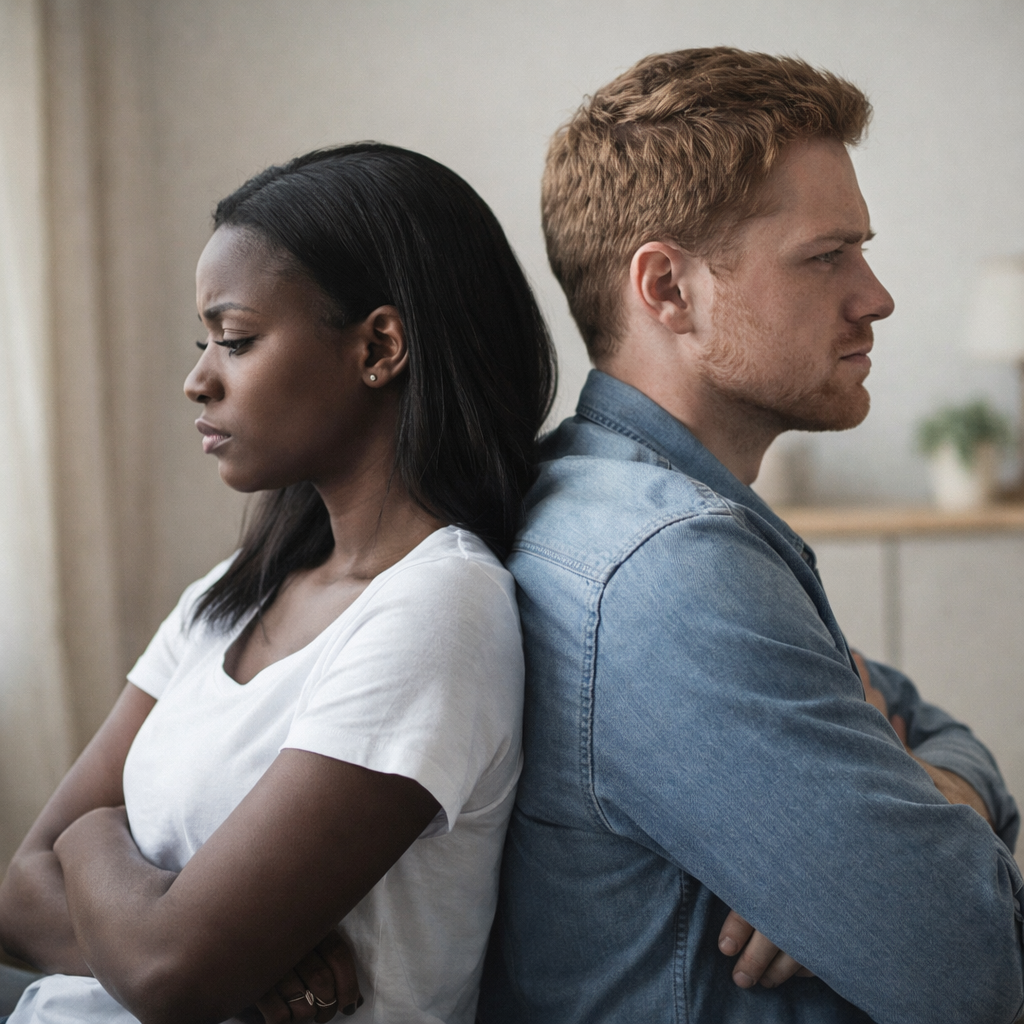
Past TRAUMA
During this phase of my life, I have spent a lot of time on dating apps.
Not just because I’m dating, but also because many of these conversations have quietly become research for my blog.
And something very interesting happens again and again.
You meet a man.
He tells you you’re beautiful.
He tells you you’re everything he likes in a woman.
But then he says something else.
“I’m not looking for anything serious.”
“I don’t want commitment.”
“I just want to have fun.”
At first, it sounds confusing.
How can someone say you are everything they want, yet still say they don’t want something serious?
So instead of getting upset or defensive, I ask questions.
Because curiosity has taught me more about people than judgment ever will.
And when you start asking these men questions, their stories begin to unfold.
Many of them are divorced.
Many of them are separated.
Many of them have children.
And almost every time, somewhere in their story, there is emotional trauma.
They will tell you things like:
“My wife changed.”
“She became someone I didn’t recognize anymore.”
“She was no longer the happy woman I married.”
And suddenly the conversation changes.
I stop being just a woman on a dating app.
I become a listener.
Sometimes even a therapist.
And that’s when I start sharing something with them that many people never talk about.
Most men do not understand childhood trauma.
And many women don’t understand their husband’s childhood trauma either.
But there is something even more misunderstood in marriages.
Postpartum depression.
Childhood trauma combined with untreated postpartum depression can destroy even the strongest love story.
It can break marriages.
It can break homes.
Because when a man marries a woman, he often remembers the happy girl he fell in love with.
But after pregnancy and childbirth, something inside that woman can change.
She may become quiet.
Withdrawn.
Depressed.
She may want to be alone.
She may lose motivation.
And the man standing next to her begins to ask himself:
“What happened to the woman I married?”
But the real question is rarely asked.
What happened to her mind?
What happened to her body?
What happened to her emotionally after bringing life into this world?
Many men don’t ask these questions.
Instead, they leave.
And then years later they find themselves on dating apps telling another woman:
“My wife changed.”
I once had a very deep conversation with a man about this.
We went back and forth for hours.
The conversation had depth. Honesty. Reflection.
And at some point he said something that stayed with me.
He said:
“Kate… if I knew all of this you’re telling me now, I think I could have saved my marriage.”
But then he sighed and said:
“I think it’s too late now. She’s seeing someone else. And I’ve also been with other women.”
He said he was still searching.
Still trying to find something that felt right again.
And I told him something that surprised him.
I said,
“What if this is not the end of your story with her?”
“What if this separation was just the break you both needed?”
After all, most people were not virgins when they got married.
Life is complicated.
People grow.
People make mistakes.
Sometimes love deserves another chance.
Sometimes a couple can meet again, years later, wiser, calmer, and more emotionally aware — and build something stronger than they did the first time.
But of course, in that particular case, we eventually unmatched.
Because with everything I had learned about him, I knew there was no future between us.
I could not trust my heart with a man who could walk away from his wife when she was struggling the most.
Because many men forget something very important.
When a woman gives birth to a child, she is not just delivering a baby.
She is giving her body, her energy, her mental strength, and sometimes even parts of her identity.
Every child a woman pushes out of her body takes a toll.
On her mental health.
On her sanity.
On her physical body.
And yet many men expect that same woman to remain exactly the same person she was before childbirth.
That expectation alone has broken many marriages.
The truth is this.
Men need therapy.
Women need therapy.
Marriage itself requires learning.
Marriage is not a place where two people arrive knowing everything.
It is two strangers who found friendship, love, and compatibility and decided to build a home together.
And the only thing that allows that home to survive and grow stronger over time is communication.
The ability to ask questions.
The ability to listen.
The willingness to continue learning your partner.
Because people change.
I am certainly not the same person I was at 15.
Or even in my 20s.
Since turning 30, everything about how I see life has changed.
The way I think.
The way I behave.
The way I express myself.
Growth is natural.
Change is natural.
And love must grow with it.
So if you ever come across this article and you feel like a part of your story is somewhere inside these words, I want to ask you something.
Please do the needful.
If it’s not too late, fight for your marriage.
That woman you left may also be asking herself questions.
She may also be thinking:
“What is happening to me?”
“I miss the old me too.”
But sometimes the only person she feels safe enough to open up to… is the man who promised to stay beside her.
If you choose not to listen, if you choose not to support her, if you choose not to seek help together, then of course the marriage will fall apart.
But healing is possible.
There is treatment for postpartum depression.
There is healing for childhood trauma.
Therapy is not something to be ashamed of.
Therapy is simply talking.
Talking honestly.
Answering difficult questions.
Understanding yourself.
And slowly finding your way back to who you truly are.
If you’re reading this today, I hope you find the courage to speak.
To heal.
To listen to your partner.
To ask the difficult questions.
And most importantly…
To fight for the life and the love that once meant everything to you.🍀
My name is Kate Jones. I have made peace with the fact that I am naturally drawn to an older white man. I value stability and seek a man who provides, leads with love, and believes in mutual respect and friendship. I look forward to sharing the second half of my life with a man who embodies these qualities.

Video Credit:
Original video sourced from Instagram. If you know the speaker, please contact me so proper credit can be given.
Interracial Dating Blog

MONDAY through FRIDAY

PAT’S BAR

YOUR DATING PROFILE SETS THE TONE


INTERRACIAL DATING IN 2026